



- 自动检测图像中的条码
- 解码ECC200、ECC000、ECC050、ECC080、ECC100及ECC140条码
- 依据ANSI/AIM、ISO/IEC 15415、ISO/IEC TR 29158及SEMI T10-0701标准计算质量指标
- 运行速度极快
- 对噪声、模糊和失真具有卓越的鲁棒性
- 支持GS1数据矩阵码
- 高效读取网格布局中的代码
- 多码同时读取
描述
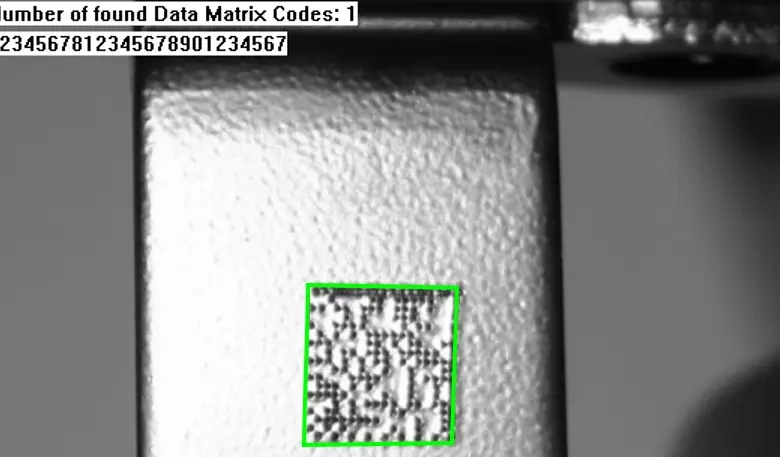
自动识别
作为自动库,学习阶段并非必需,但可选。为限制搜索范围并加速进程,可手动设置矩阵代码的部分特征,包括:矩阵代码家族、单元数量、单元颜色、是否允许翻转。
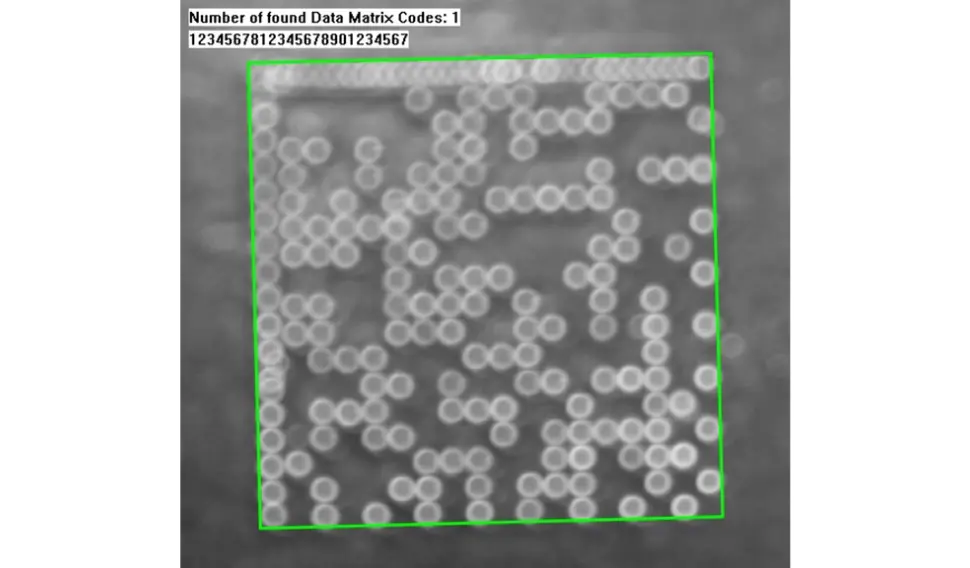
对噪声、模糊和失真的出色抗干扰能力
EasyMatrixCode 适用于最严苛的环境。其设计旨在满足最复杂的应用场景,例如:
- 光照条件恶劣:对比度不均、曝光不足或过度曝光的图像
- 因印刷或光学缺陷导致的劣质图像:模糊的数据矩阵码、各向异性与比例失真、噪点图像、倾斜图像
- 难以识别的码:微型码、纹理背景上的码、通过点蚀、激光标记、喷墨打印或电化学蚀刻在各种材料上形成的码
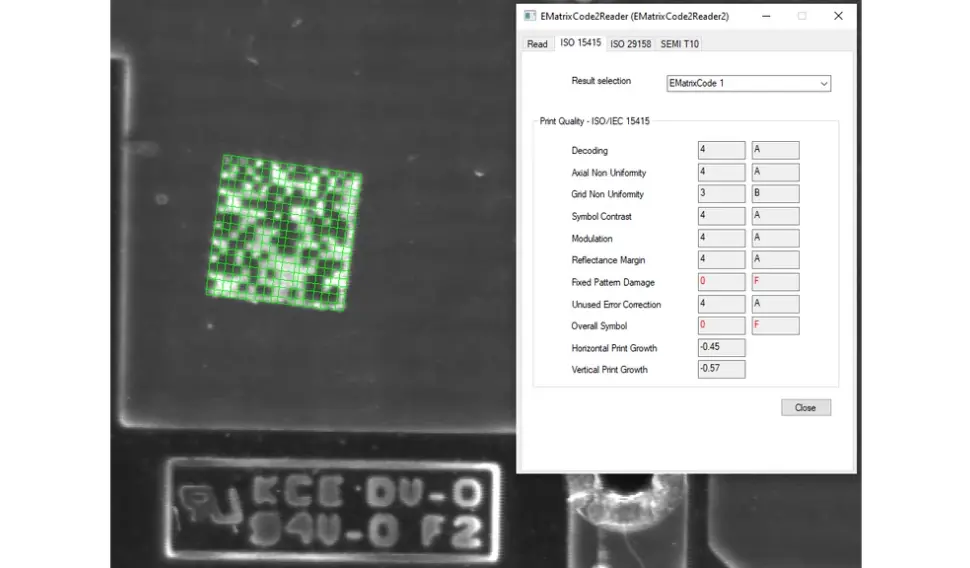
印刷质量验证
EasyMatrixCode对数据矩阵码的质量进行检测,并根据ANSI/AIM、ISO/IEC 15415、ISO/IEC TR 29158及SEMI T10-0701标准定义的指标进行计算。
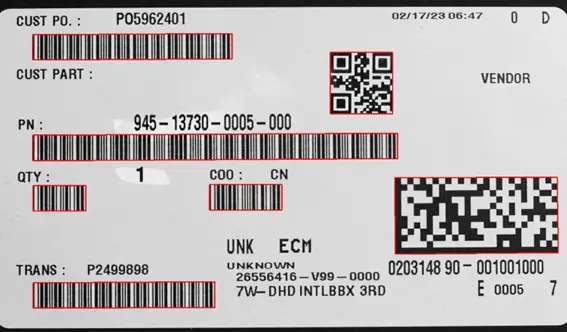
ECodeReader:一次扫描,识别更多条码
ECodeReader通过将EasyMatrixCode2、EasyBarCode2和EasyQRCode整合到单一简洁的统一界面中,简化了在同一图像中读取多种代码类型的流程。某些应用场景下,读取多种代码类型是必需的。此前实现此功能需要使用多个代码阅读器(即每种代码类型对应一个阅读器)。 ECodeReader通过整合EasyMatrixCode2、EasyBarCode2和EasyQRCode的强大功能,将其集成到单一、简洁且统一的界面中,从而简化了该流程。借助ECodeReader,您只需调用单一方法即可读取条形码、数据矩阵码和二维码。注意:ECodeReader需要EasyMatrixCode、EasyBarCode和EasyQRCode的许可证。
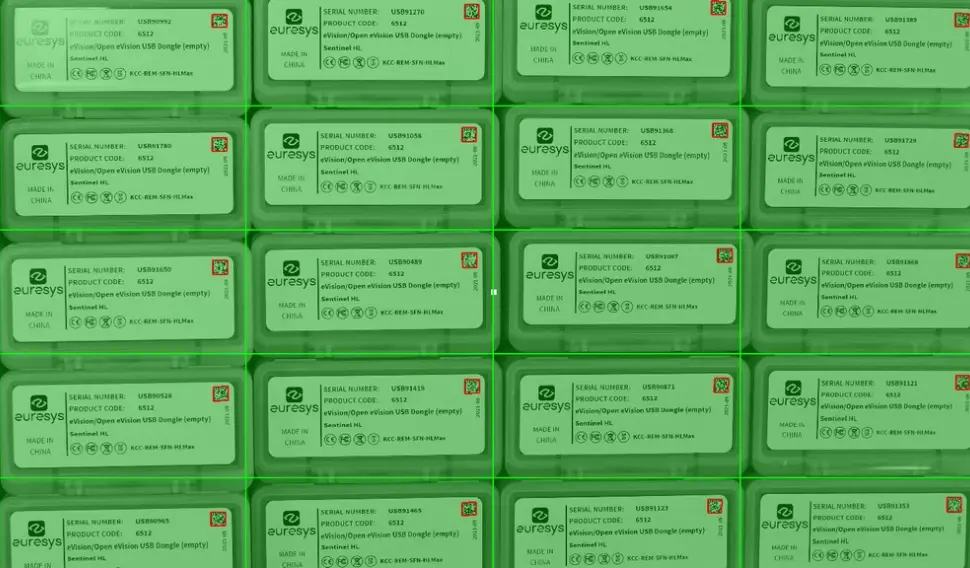
网格阅读
EasyMatrixCode2支持定义网格以提升对规则排列数据矩阵码的读取效果。在条件允许时,使用网格能显著提高读取可靠性与速度。
其他福利
新许可系统
Neo 是全新的授权系统。它可靠且技术先进,现已支持存储 Open eVision 和 eGrabber 授权。Neo 允许您选择授权激活方式:可通过 Neo 硬件密钥或 Neo 软件容器激活。购买授权后,您可随时决定激活方式。
Neo加密狗提供坚固的硬件支持,可灵活转移至不同计算机使用。Neo软件容器无需专用硬件,仅与激活所在的计算机绑定。
Neo自带专属许可证管理器,提供两种操作模式:直观易用的图形用户界面,以及可轻松自动化Neo许可证流程的命令行界面。
适用于Windows和Linux的所有Open eVision库
- Microsoft Windows 11、10 适用于 x86-64(64 位)处理器架构
- Microsoft Windows 11、10 IoT Enterprise 适用于 x86_64 系统
- 适用于 x86-64(64 位)和 ARMv8-A(64 位)处理器架构的 Linux,需使用 glibc 2.18 及以上版本
Open eVision Studio
Open eVision Studio 是 Open eVision 的评估、原型设计与开发工具。
其直观的图形用户界面支持调用 eVision 的任意 2D 图像处理功能,并即时显示处理结果。脚本功能可生成对应代码,用户可直接复制粘贴至应用程序中。
Open eVision Studio 完全免费(需搭配 Open eVision 2.0 及以上版本使用),且无需任何许可证。



Software
- Host PC Operating System
-
Open eVision is a set of 64-bit libraries that require an Intel compatible processor with the SSE4 instruction set or an ARMv8-A compatible processor.
Open eVision can be used on the following operating systems:
Microsoft Windows 11, 10 for x86-64 (64-bit) processor architecture
Microsoft Windows 11, 10 IoT Enterprise for x86-64 systems
Linux for x86-64 (64-bit) and ARMv8-A (64-bit) processor architectures with a glibc version greater or equal to 2.18
Remote connections
Remote connections are allowed using remote desktop, TeamViewer or any other similar software.
Virtual machines
Virtual machines are supported. Microsoft Hyper-V, Oracle VirtualBox and libvirt hypervisors have been successfully tested.
Only the Neo Licensing System is compatible with virtualization.
Minimum requirements:
2 GB RAM to run an Open eVision application
8 GB RAM to compile an Open eVision application
Between 100 MB and 2 GB free hard disk space for libraries, depending on selected options.
- APIs
-
Supported programming languages :
The Open eVision libraries and tools support C++, Python and the programming languages compatible with the .NET (C#, VB.NET)
C++ requirements: A compiler compatible with the C++ 11 standard is required to use Open eVision
Python requirements: Python 3.11 or later is required to use the Python bindings for Open eVision
.NET requirements: .NET framework 4.8 (or later) or the .NET platform 6.0 (or later) are supported
Supported Integrated Development Environments:
Microsoft Visual Studio 2017 (C++, C#, VB .NET, C++/CLI)
Microsoft Visual Studio 2019 (C++, C#, VB .NET, C++/CLI)
Microsoft Visual Studio 2022 (C++, C#, VB .NET, C++/CLI)
QtCreator 4.15 with Qt 5.12
Ordering Information
- Product status
-
Released
- Product code - Description
-
PC4157 Open EasyMatrixCode for USB dongle
PC4307 Open eVision EasyMatrixCode
- Related products
-
PC6512 eVision/Open eVision USB Dongle (empty)
PC6514 Neo USB Dongle (empty)

